


Thank you! Your comment has been submitted successfully. You should be able to view your question/comment here within a few days.
Error submitting comment. Please try again momentarily.
The Continuum is so quiet, you might forget its there. This system works with your standard coupler and a 2" hitch, plus it has a 4" extended shank for extra clearance when hooking up.
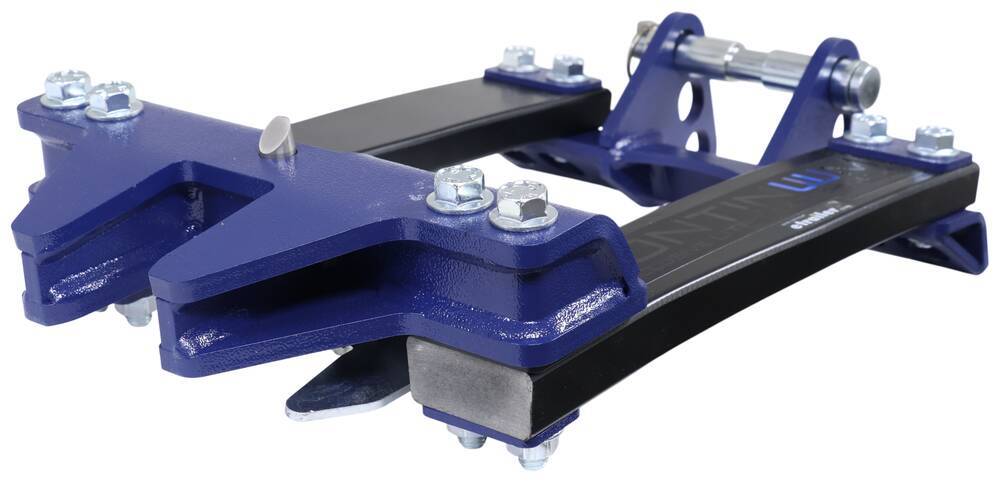
When your tongue weight is perfectly balanced, you can achieve sway control without the need for additional sway bars or noisy, friction-inducing brackets. The Continuum allows you to do just that. The single-piece load bar assembly on this system is designed to transfer weight off of the coupling point and evenly disperse it over the axles of your truck and trailer instead.
Other weight distribution systems require a ton of manual adjustment to get the weight balanced. You might have to switch out chain links or play around with the height of frame brackets to get the right tension on the spring bars. The tilt of the system head might need to be adjusted too to get the load distributed. But even with those adjustments, it can be almost impossible to fine-tune the system enough to get your tongue weight perfectly balanced.
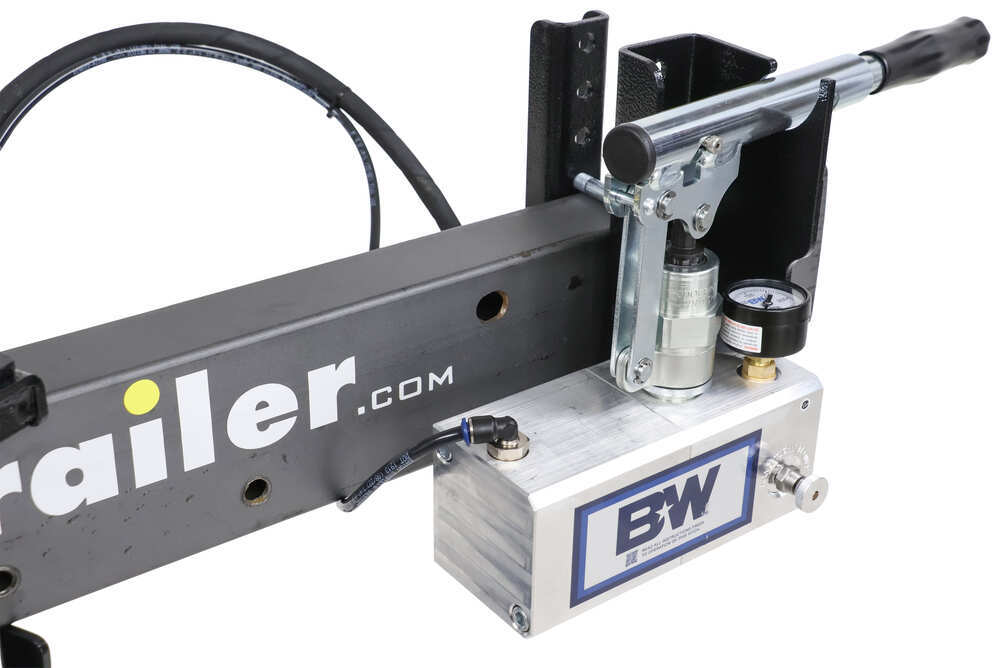
The Continuum replaces manual adjustments with hydraulic pressure, making weight distribution effortless. Just pump the handle on the driver's side - no need to walk around snapping up spring bars. Plus, you can fine-tune tension quickly for a perfectly balanced ride.
Hooking up your trailer shouldn't feel like solving a puzzle. If you've ever struggled to drop your tailgate without it hitting the hitch or squeezed past a spare tire just to hook up, you'll appreciate the extra clearance an extended shank provides. By positioning the hitch head further from your vehicle, it helps prevent frustrating interference with tailgates, spare tires, and trailer-mounted accessories. That means easier access, smoother hookups, and less hassle when getting ready to hit the road. Whether you're loading gear in the truck bed or making last-minute adjustments, you'll have the space you need to work comfortably.
When you first install the Continuum, it might take a bit of time to get the load bar assembly, hydraulic cylinder, and hydraulic pump mounted on your trailer. But once everything is in place, setting up the system each time you tow is a snap.
The hitch head - which mounts in your vehicle's receiver and provides the attachment point for the Continuum - features a preset angle, so the only adjustment you might need to make is to move the head up or down along the shank. Unlike other weight distribution systems, you won't need to change out any hard-to-reach washers or read - just the tension on spring bars to get set up. The head also has friction sway control built in to help hold your trailer in line at the coupling point.
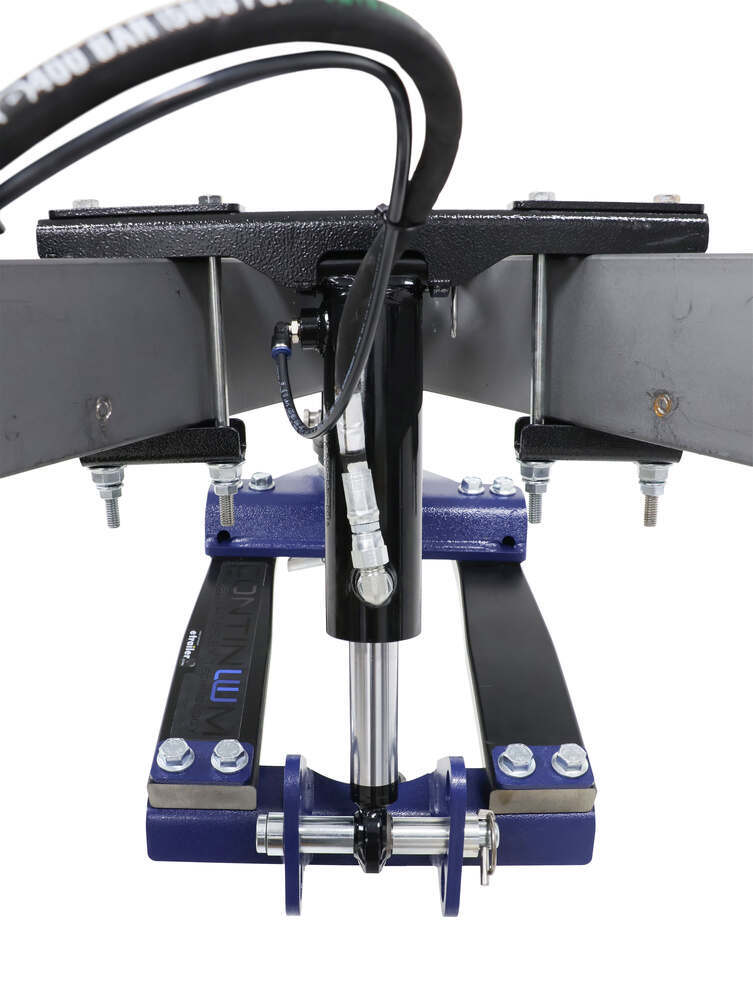
Instead of rigid steel spring bars that have to be manually snapped into place, the Continuum has a composite load bar assembly that raises with a pump of a handle. This assembly uses a flexible composite material called LiteFlex, which is strong enough to handle heavy loads, yet flexible enough to ensure that you won't have a rough, rigid ride at lower tongue weights. Because of this, the Continuum can handle anything from a small enclosed trailer to a large camper, allowing the system to grow with you.
Once you get your trailer hooked up and you're ready to transfer your load, just pump the handle on the hydraulic unit. This will raise the rear of the load bar assembly to distribute your tongue weight.
The knob on the side of the hydraulic unit allows you to back off some of the pressure you pump in so you can dial in just the right amount to get your towing setup balanced. Take note of the psi reading on the built-in pressure gauge once you're done and record it in the included log for the next time you tow.
If you start to experience a bumpy ride while towing with the Continuum, it might be a sign that you've moved too much weight off of the connection point. Fixing this is simple: find a place to park and turn the built-in adjustment knob on the pump unit to release some pressure.
The tongue weight rating is the most important factor in determining which size weight distribution system you should use. If the bars of the system you choose are rated too high for your setup, they will create a rigid ride, which can result in a bouncing trailer. If, on the other hand, the bars are not rated high enough, the system will be unable to properly distribute the weight, rendering it virtually useless.
To determine the proper weight rating for a weight distribution system, you must first determine your trailer's tongue weight. Then add to that the weight of the cargo behind the rear axle of your tow vehicle. These two measurements make up the tongue weight rating for a weight distribution system.

Videos are provided as a guide only. Refer to manufacturer installation instructions and specs for complete information.
Hey, neighbors, Kevin here with etrailer, and today we have our friend Sean from B&W here and they're gonna be telling us a little bit more about the B&W Continuum weight distribution hitch. So Sean, can you tell me a little bit more about how this system works and what makes it stand out compared to others on the market Absolutely, so this is our Continuum weight distribution hitch. We did things a little bit differently than your traditional weight distribution hitch, which you're used to having the torsion bars or the chains, things like that. This is gonna be a hydraulic-driven weight distribution hitch. So instead of using the torsion bars, you've got a hydraulic cylinder with your hydraulic pump. Your customer is gonna have a specific PSI rating for their truck and trailer, whatever that number is, you pump that handle, that needle is gonna rise up with the hydraulic pressure.
Once that needle hits that number, you stop and you can go ahead and take off and begin your journey. Kevin Having this so tight and compact here, it just really makes a huge difference. Absolutely, yeah. So it pretty much takes the need of having to jack your trailer up using a tool to get those bars over and connected. All of those pain points from a traditional weight distribution hitch that we put a lot of thought into how to rid of those and still be able to either meet or exceed your weight distribution and your sway capabilities as a traditional weight distribution hitch.
The less room you need is basically two inches right here. So you need two inches from the back of the coupler plate to the front of the propane bracket. That's really the only measurement that you're gonna need for this hitch. The pump bracket there, it can be moved up and down. If you've got a brake controller or you've got a battery disconnect, like we have over there, you can kind of measure that and put it wherever you need to put it.
There's not an exact measurement there, so it's kind of up to the end user, and then we provide plenty of hose there to be able to move or maneuver that wherever you need to. So another issue a lot of weight distribution hitch owners have is that once they get to their campsite, they can't just pull right in, they gotta get out, undo the spring bars, and then they can finally back up into the camping spot. Now, you've told us before that this is able to back up. You know, how is that possible with the system Absolutely, yes, so you can back into your campsite without needing to depressurize or remove any components of our Continuum weight distribution hitch. So the reason is, is there's really nothing attached to the frame.
There's no tension actually on the frame of the trailer itself. The bars can stay loaded, you can back in, and then release 'em, decouple and take off. That's really all you need to do. So one of the other main concerns aside from just distributing that or distributing that weight is sway control. So how does this manage that sway and keep our trailer in line So traditionally, the verbiage when you talk about a weight distribution sway control hitch has been the term sway control. Sway control pretty much implies that you are controlling it after it starts. So a traditional weight distribution hitch, your trailer's gonna start to sway, you're gonna release one side, you're gonna load another. So it's gonna try to correct it after it starts. What we like is sway prevention. So this is a more of a sway prevention hitch than it is a sway control hitch. And the reason is that the bars here on the Continuum, they stay loaded continually through the whole tow, hence the name Continuum. So you've got a solid connection between the hitch, the truck, the trailer throughout the entire tow. So there's nothing to release, nothing to put a load on. You're staying continually loaded through the whole tow. Now, we have a lot of people that typically come in for both a weight distribution hitch and then some other kind of aftermarket rear suspension enhancement. Now, typically that's gonna be air springs and I actually do a lot of air spring installs myself. I even have one right after this, I have to go hop on. What is your opinion on air springs when it comes to using the Continuum Yeah, so the Continuum weight distribution hitch eliminates the need to use airbags. So airbags are not gonna be necessary to run the Continuum. When you pressurize that load bar, it's gonna bring the truck up to where it needs to be. If you run an airbag system alongside the Continuum weight distribution hitch, they fight against each other. So you're not gonna get the effective amount of weight distribution as weight control as you would with airbags. We recommend deflating the airbags to the minimum amount that the manufacturer of that airbag recommends and then just rolling with that. So now that we are hooked up, how exactly do we find the right pressure You know, how does this whole pump system work with this So each truck and trailer is gonna be different depending on the tongue weights of the trailer and the suspension of the truck. So if you're sagging like this, you're obviously gonna wanna bring that up to get your weight distributed properly. There's a couple of ways to determine how to get that number. One way is, is if you know what your VTW is, your vertical tongue weight is while you're loaded, you can take that times 1.2, and that will tell you what your PSI reading is. A lot of times that requires going to a scale, getting a really accurate reading. The other way you can do it is the old school way. Pull your truck on flat level ground, measure from the ground to the bottom of the front driver wheel well, then couple your trailer on it, it's gonna change that measurement. You'll take that second measurement and you'll pump that handle until you get halfway in between those two numbers. And whatever that needle says at that point, that's exactly what you're gonna use every single time. Now what happens if we go a little bit over that Is that gonna be a problem So is there any kind of 1 to 200 PSI either above or below is completely normal. That's gonna be okay. You do wanna stay right around that PSI number. For this truck and trailer, we're at 700 PSI. So I know that when we go to leave, I'm gonna pump this up until that needle says 700. When I stop and get gas, I'm gonna just give it an eye to see if we're still in. If I need to release a little bit or add a little bit, I can do that on the fly. So I need to be at 700 PSI. So I will go ahead and start pumping this up. The load bar's gonna come up. Kevin And you're easily doing that with one hand. Sean Two fingers. Two fingers, you can do it with two fingers if you want. All right. Kevin Set up in a matter of seconds. Sean That's it. Now, my weight distributed off of the rear axle, 50% of it back onto the front axle. So now, we are technically like this and not like this or not like that. So this does look like a fun toy for those that have kids. I know mine especially would be over here cranking away on it. What is the protection for this if we just go crazy over. Okay. Like what if we start pumping and you know we're hitting way past that 100 or 200 wiggle room Sure, sure, very easy. So I actually put it up to about 900 right now, which 700 is where I need to be. So if I need to back it off a little bit, you can just release that needle valve and start over. So as time goes on, a lot of people are swapping out their trailers usually within three to five years. What if I'm upgrading or downgrading Do I need to buy any other components Do I need to swap anything out with this hitch so I can switch over to that other trailer No, sir, that's another nice thing about the Continuum weight distribution hitch. The head unit here is rated for 16,000. The load bar is rated for 600 to 1600 vertical tongue weight. So that pretty much covers all travel trailers that you can purchase. You're gonna have a hard time finding one that exceeds that. So yeah, you would just take the hitch off of this off your trailer and move it onto your new one. So since this does live outside for the majority of the time here, since that'll just rack right up onto that bracket that's mounted to the trailer jack, are there any maintenance steps that we should be following so that we make sure that our system's properly running each time So we put a lot of thought into the maintenance side of this hitch to make it easier for the end user. The hydraulic system here is all self-contained. There's no maintenance that you have to do, there's no fill valve, you don't have to add hydraulic fluid. It is all self-contained. Now, on the head unit itself, the load bar will snap onto this little spindle right here. That spindle rotates 360 degrees. It's a dual manifold up in here. So you'll turn it this way, hit the top one, turn it that way, hit the bottom one, and we recommend to do that every five to 600 miles. So now, we've gone through our system here in a much more detailed fashion, could you just give a quick summary of why a neighbor would want this specifically for their trailer Absolutely, so the first and foremost thing is the ease of use. It is super easy to use no matter what your capabilities are. I've seen a 6-year-old kid pump this up and get it ready to go, so it virtually can be used by anyone. The nice thing about the head unit is, is you don't have to worry about bolts or washers or nuts. The head unit works just like our Tow & Stow does, where you just pull the pins, you can run it up and down depending on how high you need your trailer coupler to be. The Continuum does not have any wear points or any friction points. So it's virtually silent when you tow. It's really no different than hooking up to an enclosed trailer with a regular ball mount and towing it down the road. But just the ease of use, that is the number one thing that people like about this hitch. You can literally, after you load, you can be coupled up, pressurized, and leaving your campsite in under three minutes, and that's huge. Really makes a difference. Absolutely. So with all that said, I really hope this makes a difference for you at home as well and helps you decide which hitch is gonna be the right fit for your setup.
Ratings & Reviews

Makes hooking up very smooth and easy compared to using load bars that are difficult and a bit scary to pull up. No noise while turning and are very stable while towing. I love that I can set the load distribution with a quick pump. Awesome customer support when I accidentally damaged the load carrier. No questions asked and replaced. Thanks B&W!
This hitch make hooking up easy. The only caution is that you should remove the hydraulic tension before you do anything else when in-coupling. If you don’t the cylinder isn’t extended enough to hook back up. I also wish that it had a little bit more sway control.
I was really debating this purchase but I am so glad I did! Went on with little effort and compared to the old system I had - and I mean OLD! - the B&W Continum is light years ahead. Took it out today for a test run and it preformed fantastic. No more sway when getting passed, no more having to stop and take sway control bars off before backing up! I pull a KZ Sportsmen 34 ft with a RAM 1500 and it was one hand on the wheel most of the time. Great product from Made in the USA! Also great service from etrailer - ordered on a Sunday had it Tuesday the same week!
All around great hitch. Pulls well no sway even with semis going by. Had 1 problem one of the spring clips came or was taken off. The hitch load bar came loose while under 1000 lbs pressure made a hell of a noise I was lucky I was only going 25 mph when it let go. I got it fixed well enough to get me home called b&m no problem they said new parts on the way. Very happy with hitch pricey but worth it. 2017 1/2 ton Chevrolet Silverado Firestone bags on the rear 5.3 chip tuned motor 2019 Keystone passport 2512 travel trailer 6000 lbs dry6500 wet and loaded was looking at Hensley. And saw this when it first came out at the rv shoe. Very tuneable esp with airbags.
Since purchasing this hitch I have spent 10 months using it continuously. It has approximately 10,000 miles on it as of now. I can safely say that I have had no problems using this hitch. The only problem was caused when my tongue jack plate scraped the side of one of the composite bars and caused the material to splinter. See photo for detail. I love the ability to add pressure as needed to move weight forward on the vehicle. If my load is heavier I can use the pump handle to add more pressure. The installation was a little bit tricky and took me half a day. This included having to pull the trailer to a flat location to ensure appropriate install. I can back up with full range of motion without needing to unhook anything. It only makes noise if it gets dey. No more being that guy clanking his way into the campground late at night with traditional sway bars. I have never regretted my choice to buy this cutting edge hitch. A final note, I have maintained my Continuum by cleaning it, lubing it with white lithium grease, and using a grease gun on the pin block.
This has been the best weight distribution hitch I have owned. We have been camping and towing all kinds of campers for over 32 years. This hitch is very easy to connect up camper and you can change when your load changes. Our current camper is 37 feet and around 10k we get no sway when trucks or semi’s pass. We bought hitch last year and towed from North Carolina to Page Arizona and back so got a good workout would not go back to top name brand X again.
We bought the Continuum because we upgraded to a 37' TT toyhauler (11,000lbs) that I pull with a Ram 2500. The RV dealers guys installed it and it was their first time. (They knew it came out but hadn't installed one yet) I tell you that because the ride home was a white knuckler and I could barely go over 50mph. It was windy but everything I researched said something wasn't right so after getting home I took my tools and went to a level parking lot and pretended I was installing the hitch myself. I made a minor adjustment to one of the mounting bolts but most importantly I found the ball was not in the 1"-2" above the trailer tongue when level and not connected to the truck. The ball was too low. I had to move it up to get correct position. Also after connecting to trailer I found the correct poundage to pump the system to for my setup to achieve the correct ride height for my truck. We then took it for a test ride down the highway. Wow what a difference. It was so nice of a ride I had to keep watching the speedo to keep from going over 65mph. And one major thing I noticed right away is when going over bridges there is very little to no "porpoising". (All this was last year when we bought it in 2024) We got out a few times and it worked very well.
2025 We went camping for Memorial weekend and it was a very similar day to when I came home white knuckled from dealer in 2024. Very windy day and it was a dream hauling it. Yes I felt the wind but still had to watch speedo to keep it under 65mph.
One thing I still am getting used to is there is very little to do when hooking up and unhooking compared to the old bar style wdh.
I am very pleased with the Continuum on how well it works. I still have the concern of reliability but only time can tell but knowing it's a B&W product is what gave me the confidence to go for it initially. It's pricey but when set up correctly it is so much nicer of a ride than the normal bar style wdh ever gave us for 7 years with our 34' camper that we used to have that it is night and day.
And no popping and banging! lol
Will not hold pressure
Hitch works well with my GMC AT4 2500 truck and toy hauler. Easy installation and very quick connect/disconnect. Silent when towing. The truck tailgate can lower when connected after I rotated the Bulldog power jack 90 degrees to offer more clearance. When towing, ensure the jack foot is fully retracted so the jack foot is higher than the load bars. It will hit if level with the load bars during tight maneuvers or off camber.
Review is based on installation only. Have not had a chance to tow with it yet. It should be advertised to be incompatible with Airstream Classic trailers. I was able to get it installed, but it required grinding out some welds for the propane tank rack which is welded to the trailer tongue on the AS Classic models. The online videos and instructions talk about moving the propane rack, but those assume a stamped metal rack that is screwed to the tongue. On the AS Classic, the rack is made from thick metal plate that is welded in place. A LOT more work than I had anticipated to install this hitch.
I recently purchased the B&W continuum WD hitch from etrailer and Ashley was on top of my purchase from start to finish! Purchase was very easy and product was delivered on time as promised. The team at etrailer made this purchase awesome! Ashley, thanks for all you do!
There's a learning curve on using it, but I really like it now. It's so much easier than the spring bars and anti sway bars I had before. Only one piece and I never have to lift the whole thing. Just half of it.
The setup works very well! I’ve only had one issue that being the first time that I used it the base of the tongue jack made contact with one of the composite springs. I contacted B&W directly and the customer service was excellent! I would recommend removing the pad on the bottom of the jack before traveling with this unit.
Thanks to Tammie B for taking my original order. After my order arrived with missing parts and broken hydraulic unit due to rough handling by UPS, Daniel P, after receiving photos from me, got a replacement hitch authorized, return labels sent, product pulled, labeled, & picked up by UPS all before closing time on a Friday. He was amazing to jump thru all of those hoops to make it right and quick. Received the packages the following Tuesday in pristine condition from UPS. Installed on a 2023 Flagstaff Classic 826mbr with 6" frame and large propane tanks which were a problem. The large tanks have a tray welded to the frame that includes a 5" vertical support frame also welded to the frame. I had to cut vertical slots in the support 3 1/2" front & 3" rear both 3" wide for the hydraulic cylinder and hoses to move. Other than that the installation was bolt on. Nothing to move or relocate. Pressure used was 1700 pounds. Works great and keeps this 72 year old man from having to strain to lift spring bars on the usual hitches. Other benefits are sway control improvement, connect everything from one side, quiet when making corners & controls porpoising when driving thru dips. It is worth the money spent
I was using an Anderson hitch with this trailer which was the same style the original owner used. Towing was a NIGHTMARE. This trailer is a huge wind sail and white knuckle does not even express enough the stress of towing this thing. I have a CDL and have been towing heavy, awkward trailers and loads most of my life and this is the worst trailer I have towed. After the first trip my wife was ready to sell. Other than towing we love the trailer, so I purchased the Continuum as a last effort and boy am I glad I did. We took the trailer on a 400 mile trip through Wyoming with 40 mph crosswinds and while you can still feel the wind pushing you around, the trailer tracks excellent. You can hardly feel Tractor/Trailers pass and the hitch totally eliminated the tail whip which made it so scary to pull. If you have a trailer you love, but don't like to pull it I HIGHLY RECOMMEND this hitch.
I’ve been full time in my Grand Design Momentum 21G for over 3 years now. I started out with the Equalizer 14k hitch setup, but never found the sweet spot with it. I spent more days white knuckling it than not, and many days avoiding highways because of the sway that these small, heavy toy hauler travel trailers are notorious for. I tried everything: moving the load distribution around inside, adding weight, deleting weight, adding water, adjusting and readjusting the hitch, upgrading tires and suspension components, over $100 on CAT scales trying to figure out what was going wrong, I even upgraded to an F-350 diesel thinking maybe it was the truck. It was the hitch.
Install was super easy, dialing it in was a bit of a challenge as a solo traveler, but I called B&W directly and they walked me through all of it, even in the pouring rain. I love that the adjustment pins on the ball hitch just pop out instead of having to break out the torque wrench and impact. Finding your distribution pressure is interesting at first. You’ve gotta play with that a bit before finding your best ride. Too much and it’ll slowly lose pressure due to the protective release valve inside, too little and it’ll be a noticeably bouncier ride. But once you find that sweet spot, it’s a game changer. I’ve now towed over 800 miles through 5 states in the mountains with this hitch. I encountered several days of heavy storms, cross winds of 20-30mph and steep grades. The hitch handled like an absolute BOSS. Do you notice your trailer behind you? Of course you do. A nearly 11k lb trailer does not just float along, even behind a super duty. But there is no bucking and chucking, no porpoising, no sway. When a crosswind tries to grab the end of the trailer, you can feel the hitch correcting it instantly. It’s a microfraction of a second in which it happens.
Backing in is so much quieter and easier. Gone are the days of the obnoxious metal on metal grinding of the sway bars. It does make an occasional noise, but nothing like the old sway bar style. Turning out of a gas station or into a campground, nobody will hear your hitch sound like it’s about to explode.
Only reason I’m giving it 4 stars instead of 5 is because it can be somewhat annoying when backing in at an angle. If the truck is not straight on with the hitch, it takes some finagling to get it off. I’ve learned to grab my legos and stack them under the hitch body and disconnect the whole ball from the shank in that situation. There is definitely a little learning curve with it, but if that’s the only issue I have with it, and it keeps towing like it does, I’ll take it.
This thing is great. I just drove from Connecicut to Arizona using this hitch on an F350 pulling a 10’ motorcycle trailer. You might ask why did I need a weight distributing hitch on a dual rear wheel F350? Well it is because I have a truck camper in the bed and a 42” hitch extension. So this hitch mitigates the leverage of that long hitch extension. The infinite adjustability allows me to dial it in nicely. I suspect it is also helping to mitigate some sag caused by the weight of the truck camper. Truth be told, the hitch did drag on the ground occasionally at gas station entry ways, but it seems strong enough to handle an occasional scrape.
I installed the Continum on our new Brinkley Z air 285. The only modification needed was to move the brakeaway switch back about 2". The only minor downside is the jack foot has to be removed for travel since it won't fit between the bars.
This is installed on a 2025 Chevy Silverado 2500HD and towing a 34' travel trailer. Unit sits too low and drags on the ground over small dips. The TT still has some sway in it, leaving me with a little apprehension. I also got the longer shank, hoping to be able to open the tail gate fully, but it does not. Not the fault of the hitch. It was fairly windy when I first brought the TT home, hopefully it was the wind causing the slight sway. I haven't given up on this, will continue tweaking to get it better.
Just installed this yesterday. I won't test the system out on the road until Friday. The installation was a breeze and attached to the truck hitch without any adjustments. The actual weight distribution portion was very light, maybe the weight of my last torsion bars. The hitch, now that's another story. It's a monster... but they all are. I'll report on the travel experience after the Memorial Day weekend trip.
The transaction went very well. The product arrived sooner than I had expected.
Installation wasn't hard, just follow the instructions carefully. Once installed the hook up and disconnect is pretty easy. You may have to adjust the angle of the load bar to get it to slip easily onto the bottom of the hitch. Same goes for disconnecting the hitch, which is actually pretty easy.
The anti sway worked very well even in strong crosswinds in the mountains. No, it's still not as good as towing a fifth wheel, but it stopped the sway quickly with no drama.
My Rivian has auto leveling, so I had to hook up the WDH first and adjust the pressure before plugging the trailer cord into the truck. But it worked very well.
I just put it on my new trailer with the EZ Latch hitch. It's very well built and easy to use. Not sure if it's as secure as more expensive stuff like the Proven brand, but it was reasonably priced and will provide good security for my travel trailer.
Ordered the hitch and it arrived in about two days. Went to pick up the new travel trailer at the dealership this morning and they let me install it myself before I left the lot. I had watched the instructional video a couple of times and I installed it in less than an hour. I have pulled fifth wheels for the past 15 years and it took a few minutes of driving to get used to the feel of a bumper pull again. About an hour drive home with the new trailer and within about 20 minutes on an interstate with loads of road construction and narrow lanes plus a direct crosswind and I am amazed at how well it handles. Pulling a 30' travel trailer with a GMC 1500 and it gave me no troubles whatsoever. Very satisfied with this hitch and the customer service at etrailer.
I’m a simple man and installation was straight forward. About an hour. Sockets set and torque wrench needed. Using the 4” extended hitch allows me to lay open the tailgate on my 1500 GMC Sierra.
Do you have a question about this Weight Distribution Hitch?
Info for this part was:
At etrailer we provide the best information available about the products we sell. We take the quality of our information seriously so that you can get the right part the first time. Let us know if anything is missing or if you have any questions.






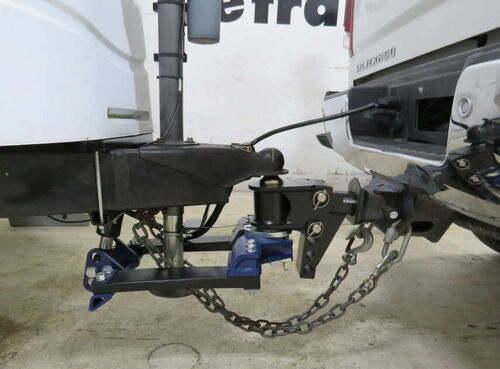














Claire H.
6/10/2026
Your set up looks great! We'd love to hear about your ride quality once you've taken it out on the road!